
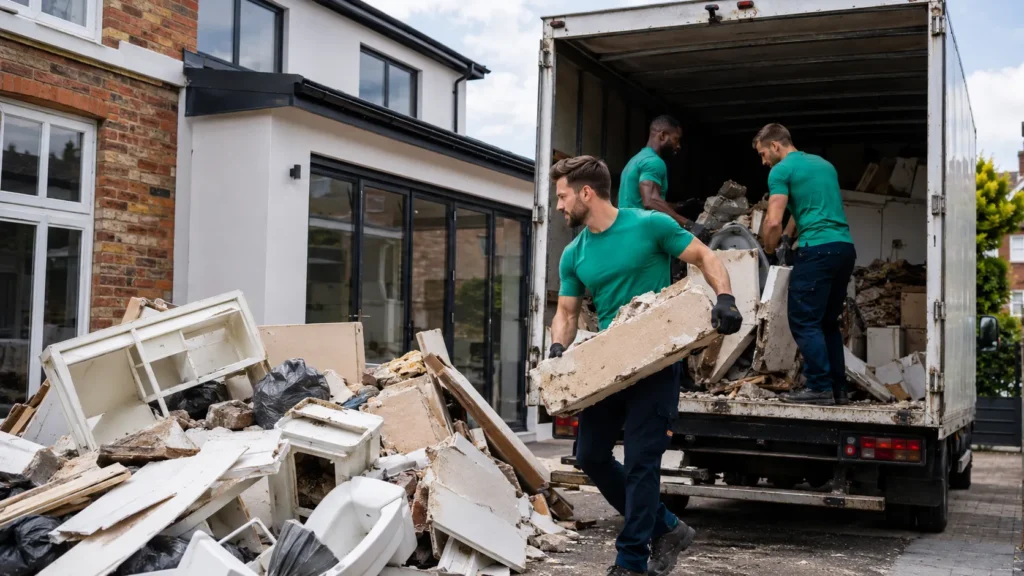
Completing a home extension in Enfield Town is a major achievement. Whether you have built a new kitchen extension, opened up your living space, added a side return, or completed a loft conversion, the finished result can completely change how your home feels and functions.
However, once the builders leave, many homeowners are left with a less exciting problem: renovation waste. Broken tiles, plasterboard offcuts, timber, bricks, rubble, packaging, old fixtures and bags of mixed debris can quickly take over the driveway, garden or side access. Standard household waste collections usually will not take this type of material, and local recycling centres often place limits on DIY and construction waste.
For homeowners who want the mess cleared quickly, a professional Rubbish Removal Enfield service can be a practical alternative to hiring a skip, especially when heavy lifting, permits and fast turnaround matter.
Why Renovation Waste Is Hard to Clear?

Renovation waste is very different from ordinary household rubbish. It is heavier, bulkier and often needs to be separated before disposal. A few bags of rubble or plasterboard may not look like much, but the weight can build up quickly.
Common renovation waste includes:
| Waste Type | Examples | Disposal Concern |
| Plasterboard | Gypsum boards, ceiling sheets, wall offcuts | Must not be mixed with general waste |
| Rubble | Bricks, concrete, masonry, blocks | Very heavy and may affect pricing |
| Timber | Studwork, old joists, floorboards | Can often be recycled or used for biomass |
| Tiles and ceramics | Bathroom tiles, kitchen tiles, broken slabs | Heavy and sharp |
| Mixed renovation waste | Packaging, fixtures, old fittings | Needs sorting before disposal |
The biggest challenge is not only getting rid of the waste, but doing it legally and safely. Property owners have a duty of care to make sure waste from their home is handled by a licensed waste carrier and taken to an approved facility.
Why Skips Are Not Always the Best Option in EN1?
For many years, hiring a skip was the default choice after building work. It can still be useful for some projects, particularly where there is a large private driveway and enough space for the skip to sit safely. But in many parts of Enfield Town and the wider EN1 area, skips can create more problems than homeowners expect.
If you do not have a private driveway, the skip may need to be placed on a public road. This can require a permit from Enfield Council. If the road is inside a Controlled Parking Zone, parking suspension fees may also apply. These extra steps can delay the clean-up and add to the final cost.
There is also the issue of unwanted dumping. A skip left outside for several days can become an open invitation for other people to throw in mattresses, electrical items, black bags and general household rubbish. Once that happens, the skip may become more expensive to collect because it contains waste that was never part of your project.
Another concern is property damage. A heavy skip being delivered or collected by a large vehicle can crack block paving, damage tarmac, mark driveways or crush soft ground. For homeowners who have just spent money improving their property, this is the last thing they want.
The Plasterboard Problem Homeowners Should Know About
Plasterboard is one of the most important materials to handle correctly after a renovation. It contains gypsum and cannot be mixed with general waste. If plasterboard is placed into a mixed skip or collected with ordinary building debris, the waste company may refuse collection or charge extra sorting fees.
This is why proper separation matters. A professional clearance team can advise how plasterboard should be handled and ensure it is sent through the right recycling route. Dedicated gypsum recycling helps reduce landfill use and keeps the disposal process compliant.
For home extensions, kitchen refits, loft conversions and internal wall changes, plasterboard waste is very common. It should never be treated as just another piece of rubble.
Why Professional Builders Waste Clearance Can Be Easier?

Professional renovation waste removal is designed to remove the work from the homeowner. Instead of spending days loading a skip, shovelling rubble or carrying sharp materials through the house, a clearance team can collect the waste directly from where it is.
This is especially useful when waste is stored inside a kitchen extension, at the back of a garden, down a narrow side return, or upstairs after a loft conversion. The team handles the lifting, loading and sorting, which reduces the risk of injury and saves time.
A local Rubbish Removal Enfield team can also be more flexible than skip hire. If the renovation waste needs to be cleared before another trade arrives, such as kitchen fitters, decorators, flooring installers or electricians, fast collection can help keep the project moving.
How Much Builders Waste Might Need Clearing?
The amount of waste depends on the size of the project, the materials used and how much demolition was involved. A small bathroom renovation may only create a light load, while a full home extension can produce large quantities of heavy waste.
| Load Size | Approximate Capacity | Suitable For | Estimated From |
| Small load | Up to 2 yd³ | Small bathroom tile removal, splashbacks, minor DIY waste | £60 |
| Light/medium load | Up to 4–7 yd³ | Internal wall removals, plasterboard sheets, timber studwork | £150–£240 |
| Large/full van | Up to 10–14 yd³ | Full home extensions, multi-room renovations, heavier mixed waste | £320–£420 |
Final prices can vary depending on how much heavy masonry, rubble or concrete is included. Access also matters. Waste stored near the front of the property is usually easier to collect than waste kept upstairs, in a rear garden or through narrow access.
Why Same-Day Renovation Waste Clearance Helps?
Renovation projects often involve several trades working in sequence. Builders may finish before plasterers, kitchen installers, decorators or flooring teams arrive. If the site is still full of rubble, timber and sharp materials, the next stage can be delayed.
A tidy site is safer and easier to work in. Removing waste quickly can free up space, reduce trip hazards and make the property easier to access. For homeowners living in the property during the work, it also helps bring the home back to normal faster.
Same-day or fast-response clearance can be especially useful when:
| Situation | Why Fast Clearance Helps |
| New trades are arriving | Keeps the site ready for the next phase |
| Waste is blocking access | Clears driveways, hallways, gardens or side returns |
| Heavy rubble is creating hazards | Reduces injury risks and improves site safety |
| The project is nearly finished | Helps the home look clean and usable again |
For busy residential areas in EN1, this can be much more convenient than waiting for skip delivery, dealing with permits or having waste sitting outside for days.
Responsible Disposal and Recycling

Renovation waste should not simply be dumped or sent to the wrong facility. A licensed waste carrier should take the material to an approved commercial recycling or waste transfer site. There, materials can be separated and processed correctly.
Plasterboard can enter dedicated gypsum recycling routes. Timber may be reused, recycled or converted into biomass fuel. Masonry, bricks and concrete can often be crushed and reused as aggregate or road base. Metals and other recyclable components can also be separated where suitable.
This process helps divert large amounts of waste from landfill. It also protects the homeowner by showing that the waste has been handled responsibly.
What to Check Before Booking a Builders Waste Collection?
Before booking a clearance service, check that the company is licensed to carry waste. You should also ask whether they handle plasterboard, rubble, timber, tiles and mixed renovation debris.
A reliable company should explain how pricing works, what materials they can take, and whether the waste needs to be separated before collection. It is also sensible to describe where the waste is located. If it is in a back garden, upstairs room, basement or narrow side access, the team needs to know before arrival.
You should also ask for a Waste Transfer Note. This gives a record of the collection and helps confirm that your renovation waste has been passed to a licensed operator.
How to Prepare Renovation Waste for Collection?
You do not need to do all the hard work yourself, but a small amount of preparation can make the collection smoother. Keep sharp materials away from walkways, separate plasterboard where possible, and avoid mixing household rubbish with builders waste.
If rubble is stored in bags, make sure the bags are not overloaded. Very heavy sacks can split or become unsafe to lift. Timber with nails should be placed carefully so it does not create a hazard. If there are large items, such as old kitchen units or bathroom fixtures, keep them accessible where possible.
The aim is not to make the waste perfect, but to make the collection safer and quicker.
Conclusion
Renovation waste removal in EN1 needs proper planning because building materials are heavy, regulated and often difficult to dispose of through normal household routes. While skips can work for some projects, they can also create permit issues, driveway damage, unwanted dumping and plasterboard disposal problems.
For many homeowners in Enfield Town, professional builders waste clearance is a faster and easier option. It removes the heavy lifting, helps keep the project moving and ensures materials are taken to licensed recycling facilities. Whether clearing waste from a kitchen extension, loft conversion or full home renovation, using a responsible clearance team can make the final stage of the project cleaner, safer and far less stressful.